
Keeping the fighters in the fight
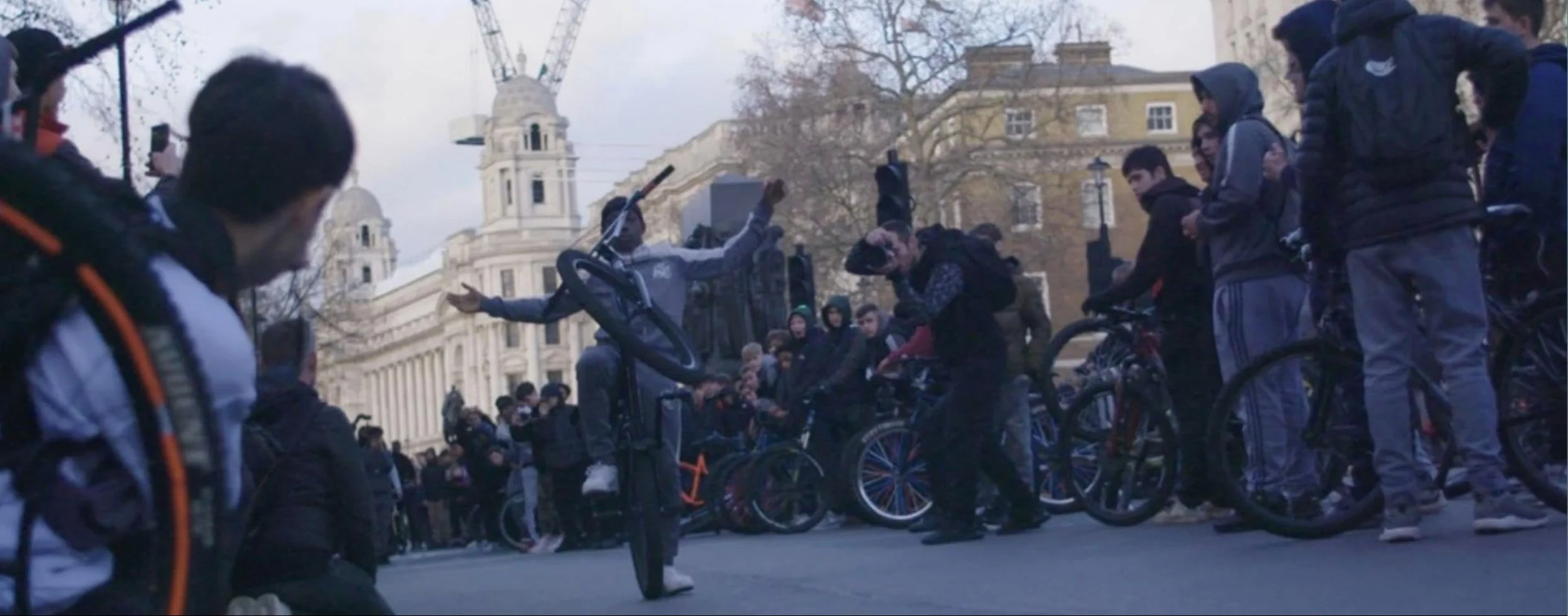
📷 A scene from the award-winning documentary film If the Streets Were on Fire by Alice Russell
From London’s streets to supporting founders - why sustainability is the real fight
Recently I watched the documentary “If the Streets Were on Fire”. It came out in 2023 and you can find it on the BBC iPlayer. It tells the story of the BikeStormz movement co-founded in London by Mac Ferrari and Jake O’Neill. BikeStormz are occasional large scale group bike ride outs across the centre of London with the slogan “Knives Down, Bikes Up”. The aim of the movement is to offer positive actions as alternatives to gang violence.
I remember seeing a BikeStormz event once early on in the movement’s evolution. I didn’t know what it was then - just being impressed by a big group of young people, dressed like they were from the endz and taking over the street right in the middle of London. Weaving in and out of the city centre traffic, in the middle of the road, doing tricks and taking up space. Not a thing I’d seen before. I remember thinking, ‘What is that all about?!’ - that’s not a coordinated ride of middle-aged middle-class cyclists in expensive colour coordinated lycra! BikeStormz grew from events with a few hundred participants (which is what I saw) to much bigger than that with thousands gathering and riding the streets.
For me “If the Streets Were on Fire” is a powerful documentary. It hits me square in many of my core values - around equality, integrity, opportunity, impact, connection, independence, taking action, tenacity in adversity, overcoming challenges, a fierce desire for growth, creative and entrepreneurial thinking. These values are common values in many purpose driven founders - so it is likely to resonate with others who identify as socially responsible entrepreneurs.
But for me it hits much deeper than that.
Because here’s what I know from two decades working in and alongside these communities: the people doing this kind of work - creating alternatives, opening up possibilities, fighting for change - they carry weight that others don’t see. And eventually, that weight can become unbearable.
So I identify first as a Scot and second as a Londoner. I lived in and around London for twenty years and she will always have a big piece of my heart.
I worked in and alongside the communities that many of the BikeStormz young people are from. Global majority communities. Communities with a backstory of migration and seeking a better life and opportunity - just like I had, leaving my country to try and make my way in the big city of London.
I never had children, but the rude boyz and rude girlz I see taking up the space that is rightfully theirs on the BikeStormz rides. I feel a strong care for and passionate protectiveness for - the desire for them to have the opportunity that is rarely fairly distributed.
My time in London and some of the work I did showed me a side of life as a Londoner that doesn’t always get shown and acknowledged. Specifically working first as a part-time youth worker in South London, then on a crime diversion project in Brixton, then moving into teaching and finally as a tutor and Creative Arts Leader in big colleges.
I have a lot of stories I could tell that sit alongside some of the stories the BikeStormz participants tell. But I’ll share three just now.
It’s around 2004 and I’m in a small mini bus with a group of around 10 young men from Brixton and two other staff on the Crime Diversion team. We are on our way to go paintballing in the forest (yes, there are some questions about the idea of taking a bus full of individuals to go play with toy guns for the day, when they are likely to have come into contact with real guns already).
As we leave South London and go out into the countryside the energy in the van starts to change. There is a mix of excitement, something more child-like than I often see from them (they are usually busy trying to show themselves as big men), a little awe and wonder appears as we move into unknown spaces - pointing and exclaiming at things out the windows of the bus, and something else as we go further from urban spaces… I notice a little bit of fear.
We are heading into the countryside and pull up beside the forest and a field with a herd of cows in it. I notice that some of these great big lads who tower over me are bunched together and standing a bit closer to me than they might usually be. They have gone quiet and are all staring at the cows - who are moving towards us as curious cows do.
‘Miss…err, are they dangerous?’
I realise that not one of the group has ever seen a cow before. Only a small number of the group had ever left South London. To all of them leaving Brixton (their ‘manor’) is dangerous as they cross into other gang territories. To me - having grown up in rural Scotland, wide open spaces, a forest and a herd of cows are very familiar and comfortable. To them - they are completely new and outside of their experiences and their experiences have them wired to be very good at looking for danger. They were scared. A state I’d not seen them in before!
But this is the reality for many young people living in London. They know their estates, but beyond that is perceived and actual danger. On their estate there is also danger, but it feels different to them as it is a known and understood kind of danger.
Fast forward to around 2010. I’m now in a leadership role in a big college in South London. At the start of the academic year I pile my whole team and all the students from all our different creative courses and levels into a small fleet of coaches and we’d go to the seaside for a day. To whatever seaside location there are some interesting creative things happening in like the Folkestone Triennial or Whitstable, Brighton or even Dungeness. I do it to set up opportunities for the students to be inspired, get out of their usual spaces (physically and mentally) and also meet, connect and bond with each other and us - their tutors.
I step off the coach I’m on and I’m standing looking out at the striking view. Our coaches are parked in a row on the side of a hill - looking out from our elevated spot over the town and then off out over the sea to the infinite wide open horizon. The sun was lighting the scene up and sparkling on the water. A young man comes and stands beside me and asks;
“Miss… is it real?”
This was the first time he’d seen the sea.
Like my boys from Brixton he’d never left South London and he’d never seen the sea before.
I don’t have hard facts, just conversations with the young people and their tutors. But I’d say around half the students we took to the seaside each year had never seen the sea before.
They lived around an hour and a half’s journey by public transport to the sea. They had been travelling on their own since they were really very young. It wasn’t that they didn’t know how to navigate buses, tubes and trains to get to the sea. The cost of the travel was perhaps a factor in them going to the seaside. But the biggest contributor was fear. Fear of the unknown. Fear of leaving the perceived protection of their manor.
My final story is from a similar time. Perhaps 2011. We were in the middle of the Autumn term. It was early in the afternoon. A group I knew and taught once a week was working in the studio next to my office with one of my tutors. The tutor came in with a student from the group, we’ll call him Dylan and said Dylan really urgently wanted to talk to me.
We sat down together and he told me he’d just got some information on his phone that one of the group, we’ll call him AJ - had been killed. AJ and Dylan had grown up together. They’d gone to primary then secondary school together. AJ should have been in his art lesson that afternoon, but he wasn’t. AJ had become much more involved in some very serious drugs and gang related stuff than anyone knew. He’d been murdered with a machete by a rival gang a few streets from his home.
We were all in shock.
Dylan was a few steps ahead in his thoughts than his tutor and me.
He was only 18 and he’d already done an assessment of the situation and the information he had. He knew that next door there was a room of students who had a relationship with AJ. Some who were still getting to know him as it was early in the college year, others who’d grown up with him, gone to school with him, there was an ex-girlfriend from school - but they all knew and cared about him. Dylan knew this sort of news travels quickly and he wanted it to travel the right way for the people in the studio next door and he was hoping I’d help with that.
This news triggered a series of actions.
The thing Dylan wanted me to do (tell the group) wasn’t necessarily mine to do. A serious situation like this goes right up the chain of command in a college to the top. Many different people are pulled in. There are a number of different agendas at play and not all of them matching Dylan and my agenda.
I had to fight quite hard to do the thing that in many ways a part of me would have been very, very happy to hand over to someone else. You don’t get training on how to deliver this sort of message. But I knew that this sort of news had to come from someone they knew and trusted and genuinely cared about them, not a collection of strangers with varying agendas. Dylan was right. It needed to be me. And it took everything I had.
Sadly this wasn’t the first time Dylan or any of the other young people in that room or any of the young people from all the different manors in London out on the streets on their bikes or otherwise had lost one of theirs to violence.
So my stories connect to why the story of the BikeStormz group is extra powerful for me.
It’s personal.
Their work is the kind of work that saves lives.
Lives that might end far too early. Lives that might be used in ways that happen when there are limited opportunities and support. Lives and energy that if harnessed for the right things are exactly the kinds of people we need out there leading the way.
Why I’m not in education anymore
I stepped away fully from frontline education work in 2020. Not because I stopped caring, not because the work wasn’t important, but because I was burning out. The weight of trying to create change within systems designed to resist it, the constant fight to do right by young people when the structures around me had different priorities - it was unsustainable.
And here’s what I knew: I wasn’t the only one carrying this weight.
The BikeStormz founders are carrying it.
Every socially responsible entrepreneur trying to create alternatives, open up opportunities, or shift systems is carrying it.
You see what others don’t see.
You feel compelled to act.
And too often, you burn yourself out trying to do it alone.
The ripple effect
When I left direct impact work, I had to sit with an uncomfortable question: how could I still have impact? The answer changed everything for me.
I realised that by using my skills to support people just like the BikeStormz founders - people who are out there doing the work, fighting the good fight, creating the alternatives - I could have even greater impact. Not by doing the work myself, but by helping others stay sustainable enough to keep doing it.
Because here’s the truth: the world needs BikeStormz. It needs every purpose-driven founder who’s trying to create change. But it needs you to still be standing five years from now, ten years from now. The impact you’re trying to create only happens if you don’t burn out first.
Keeping the fighters in the fight
My biggest respect goes to the BikeStormz crew. To Mac Ferrari and Jake O’Neill and every young person taking up space on those rides. You’re saving lives.
And my work now? It’s to help keep people like you in the fight. To help socially responsible entrepreneurs and purpose-driven founders stay sustainable when they’re battling systems much bigger than themselves. To amplify the potential for success of those trying to have impact.
Because the work you’re doing matters too much for you to burn out doing it.
If you’re a founder who sees problems others don’t see, who feels compelled to act even when it’s hard, who’s carrying weight that feels unsustainable - you’re exactly who this work is for.