
The rules of a game I was already winning
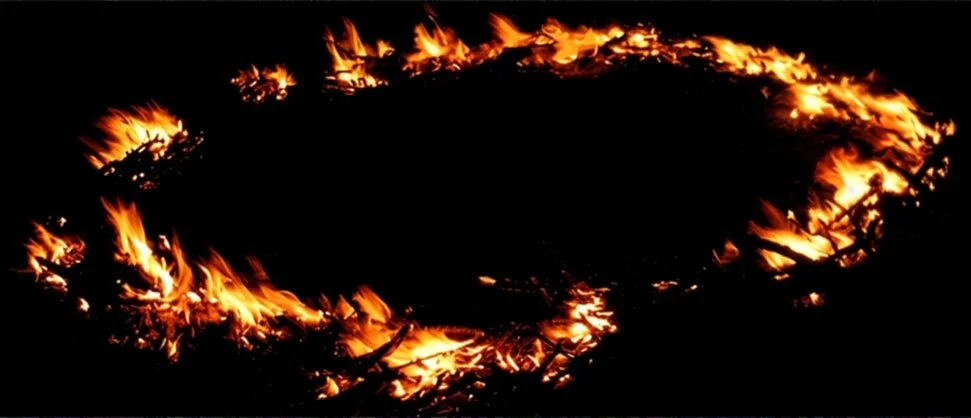
📸 by Tanya Paget
I sold much of what I made as a teenager.
Paintings mostly, and drawings. Works on paper, because that’s what school had, that’s what I had. Some people who cared about me found ways to get the work into galleries, so at 14, 15 and 16 I was hanging my art work alongside adults who did this for a living. The show would run. The red dots would go on. I didn’t know that was unusual. I had no idea how the art world worked, commercially or otherwise. I made things for the pleasure of making them and people bought them, and I took that as simply how it was.
At 17 I went to art school. One of the top ten institutions in the world. I was the youngest in my year and didn’t fully understand what I’d got into, though I was very ready to be somewhere nobody knew me. In the first week they put the whole year in a lecture theatre. Just under 100 of us. For every one of you sitting here, they said, about 90 people applied and didn’t get in. And of the 100 in this room, two will make it as professional artists.
I think it was meant to make us work. For the youngest person in the room it did something else.
A year trying to be things I wasn’t
So I spent a year trying to be things I wasn’t.
I’d come from paper to a course built on concept and site - a big jump in medium and a bigger one in purpose. I learned the new language the way everyone does, by stealing it. From established artists, from my tutors, from the people at the next desk. I got interested in semiotics, in synaesthesia, in signs and symbols, in speaking without words and seeing past the edges of the image. I went a long way out there. The drawings from that year are strange and there are a lot of them.
You can’t be better at being someone else. I tried anyway.
And when the game of being a good art student got too confusing I went to the one where I already knew how to win - the dance floor. Winning there was enjoyment, immersion and staying up till the lights came on. I was better at it.
The strange drawings had a reason I didn’t tell anyone. That Easter, three of us went camping far up in the North of Scotland, making work in the wild, a fire by a river, friends of a friend joining on the last night. Late on, things went more than a bit weird. A person screaming in the dark up by the forestry track miles from anywhere. Most of us there had grown up rural, some from that area. We knew what a deer scream sounds like. This wasn’t that.
One of the boys and I took one of our two bad torches and walked up towards where the scream had seemed to come from, while the others stayed by the fire. We found nothing. We sat up till first light. Scared and speculating.
It turned out to be nobody - someone who’d decided it would be funny to frighten a tent full of teenagers. The drawings were me trying to say what it was like to walk away from a circle of friends, light and warmth towards that scream in the dark, without saying it.
At the end of the year I went West out to the coast and built a different kind of work. A different circle.
A few older students, dance floor friends and others came out to help me make it. We spent the day collecting driftwood and dried seaweed on a beach and laying it out in a great big ring, building it up, and when it got dark we lit it. It burned for about an hour. We stood and quietly watched it together - the crackles of the fire and the sounds of the sea in the background. Then it slowly burned down, and later the tide came in and washed it off the sand.
What’s left of it is a few old photos of a circle on fire, and whatever’s still in the heads of the people who were there. We’ve all scattered since, thirty years on, not in touch. That felt right.
Then I was in the race
At the end of the second year of Art School we were set a project to produce a piece of public art. The whole thing, start to finish - find a site, get permission, raise the money, bring the public in, have work in place for a week.
I picked three little old cherry trees in the Botanic Gardens in Glasgow, at a place where the paths cross. People cut through there every day - to work, to uni, to school, out for a walk. In May, with the branches heavy with blossom, I set up a table near to them with a pile of long strips of white fabric and some black marker pens, and asked anyone who stopped to write a wish and tie it to a tree.
I got 1,200 wishes in five days. World peace and a pony. A cure for a broken heart. Happiness. A new hair colour or car. Someone’s Mum getting better. People stood and read other people’s wishes for an hour at a time. People cried. People came back the next day to see what had been added. The strips hung down and moved in the wind, and you could walk in among them. This work snowballed well past me.
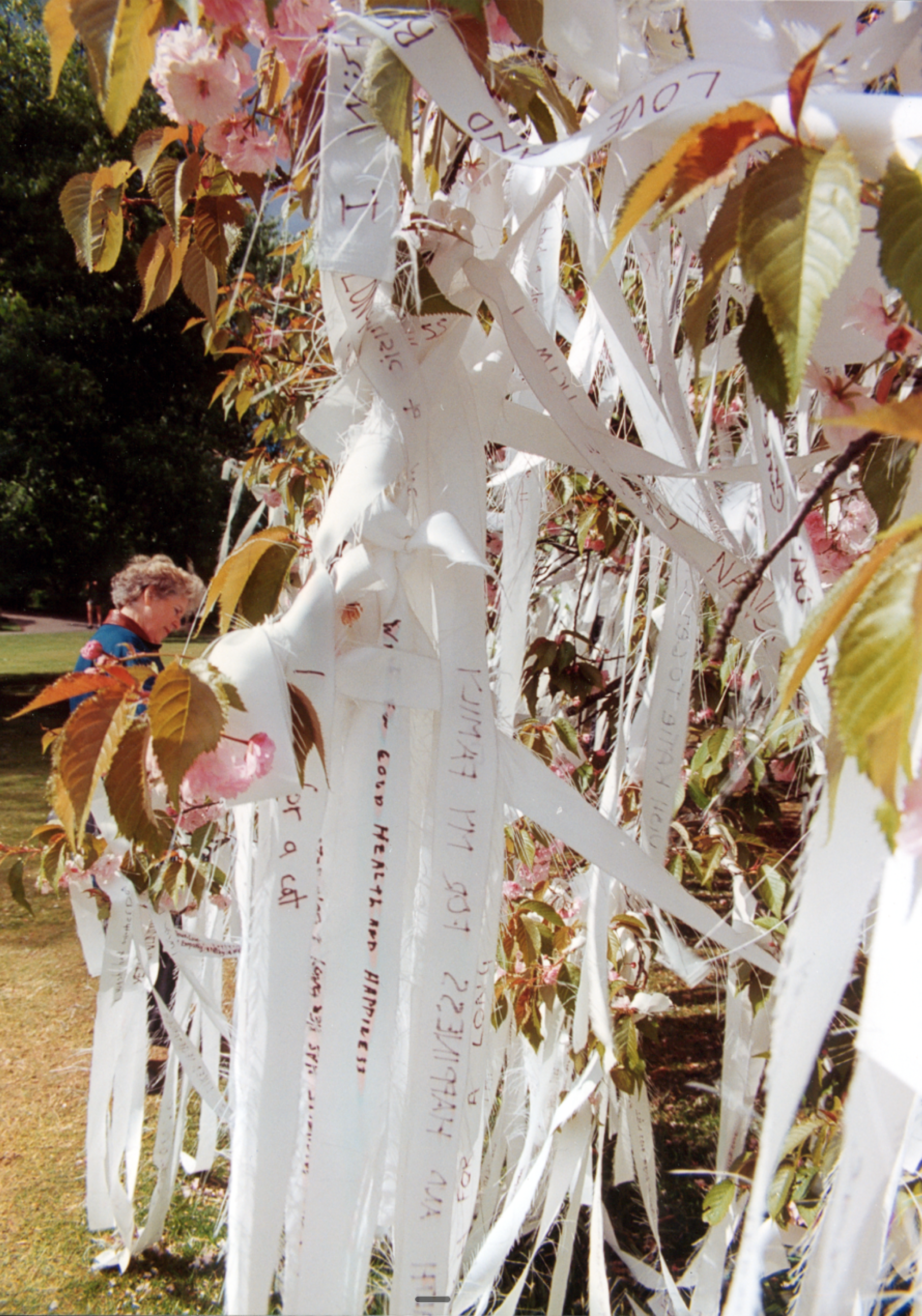
📸 by Tanya Paget
My tutors came. The head of department came. The papers came, local and then national. For a week I was the kid who’d made the thing everyone was talking about.
And I had made it the same way I’d made everything before that lecture nearly two years ago. Nobody was watching. I had nothing to lose and no idea it was going to work. I’d been the daft young one at the back of the year, not visibly in the race, and that had given me the one condition I needed - space.
Then, bang, in a week of wishes - I was in the race…
The department was producing Turner Prize nominees. Would I be one? Was I going to be one of the two? I’d spent two years rejecting their scoreboard and now, the moment something worked, I picked it back up and started checking it.
I didn’t make anything as good as the wishing trees work for a long, long time. Ask any musician what they made after the number one.
That’s the part I’d have told you was about pressure. It’s simpler than that. I’d been told the rules of a game I was already winning. And instead of noticing I was winning, I learned the rules. Someone else’s rules, for a game that had been going fine without any.
He was right, and being right didn’t help
A founder I work with has good instincts. Not vague, very good - the kind you can check. Years ago he had a bad feeling about some people being brought into the family business. He said so. He was told to make the case. He couldn’t, not in the language they wanted, because his ideas don’t arrive in words first - they arrive whole, a gut feeling, and the words come after. So he was overruled. And then it played out exactly as he’d said.
He was right, and being right didn’t help.
Because what he took from it wasn’t ‘trust the instinct’. It was ‘prove it’. Every time since, he’s gone looking for the evidence before he’ll act on the thing that’s been reliably ahead of the evidence for years. The instinct hasn’t got worse. He’s just stopped letting it drive, because somebody once told him that wasn’t how decisions were made.
It was only the fun stuff
Years later I was designing surface pattern - the stuff that ends up on fabric, wallpaper, stationery. I was exhibiting and selling in that sector and most of what I made was built to sell. Trend-aware, market-facing, careful. I registered the copyright on it. I watermarked it before it went anywhere.
Alongside it, for fun, I made other things. One of them started as inky marks on paper, loose and abstract, and I turned it into a repeat because I liked its energy. It wasn’t what the market wanted, as far as I could tell. I shared it with a handful of other designers in a small online group, as work in progress. No watermark. No registration. It was only the fun stuff.
Ten years later I found out it had been stolen.
It was identified by a firm that specialises in helping artists whose work has been taken. I didn’t even know it was out there. They’d found it being sold commercially in quite a lot of places, traced it back to me, and took it through a legal process. To work out what I was owed they had to establish how much the stolen design had made. It had been out there earning for a decade…
I made more money from that than I have from every sale of my own work put together.
The design I hadn’t bothered to protect. The one I made because I liked its energy.
I still get tempted by other people’s rules. I can feel it start - the thought about what someone might think, the ‘shoulds’ - and often it’s there before I’ve made anything at all. It gets in early. I notice it more often than I used to. I know what it is, and I step away from it.
And there’s work in my studio that’s been quietly building for the last year. It’s got a lot of the energy the inky marks had. I’m not showing it to anyone in particular. I’m making it because I like it…