
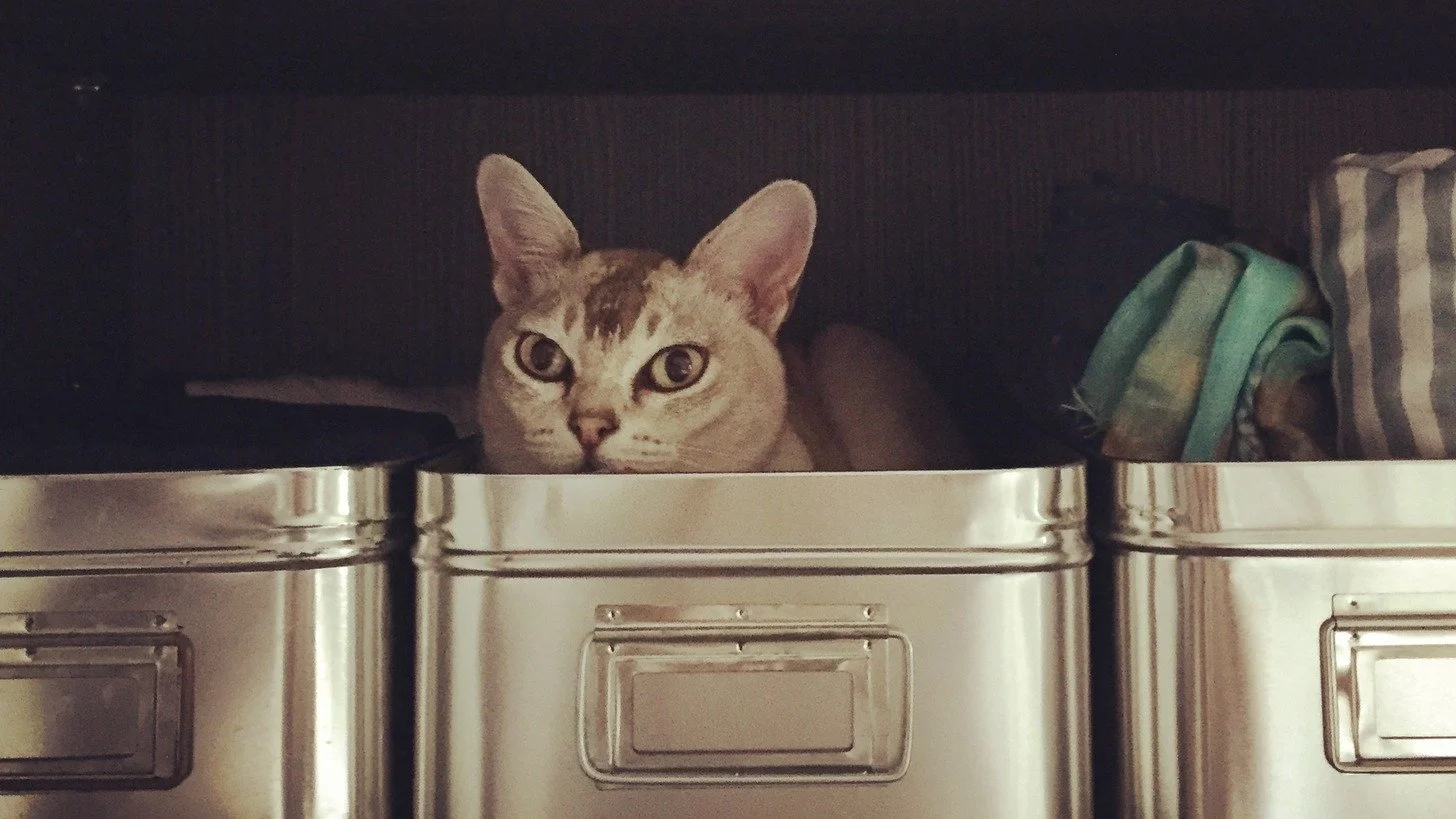
📷 The late, great Bunny - proof that things rarely stay in their boxes
A long time ago I wrote a line for my website: I work with people who give a ****!
I didn’t overthink it. It described the people I knew I could help, because I was one of them.
People whose values look like integrity, impact, progress, opportunity and equality. People who can’t walk past something that’s wrong. The ones building something because they’d lie awake at night if they didn’t.
What the line leaves out is what it costs. Caring this much is sometimes exhausting. And when it gets heavy enough, it can feel like there’s only one way out.
Half of me in a box
A few years ago we hit a long, lean stretch at home, and the financial weight landed on me. It went on for a long time. It felt suffocating, and I felt very alone in it.
So I did what made ‘sense’. I cut back everything I cared about and threw the hours at the hole.
Time outside went. Looking after my body went. My creative work went.
Slowly, things steadied. Some of it came back - a bit of time outdoors, a bit of time for my body. Less than I’d like, but some.
The creative work didn’t come back.
I’ve identified as an artist since I was about three. I have three degrees in creativity, creative practice and creative thinking. I had never, at any point in my life, not been making work. And I put it in a box.
My creative materials were hidden away. I stopped going to galleries, because I’d come home inspired and then heartbroken, with nowhere to put it. Friends who knew me as an artist suggested five minutes of sketching a day. I said no. It would be like being shown an amazing meal and told I could have one bite. I’d rather not even look at the meal.
I couldn’t talk about it without getting emotional, so I didn’t talk about it. I pushed it down and held the lid on. For almost five years.
The exit everyone reaches for
I see this in coaching all the time. When caring hurts enough, caring less starts to look like the answer.
One client, worn down by a working relationship where one person held most of the power, said, “Maybe I just have to be like a robot and accept it.” Another caught herself at work thinking, “I don’t care about the person.” She knew it wasn’t true. She didn’t like what it was doing to her either.
I want to be clear about this part. If you’re backed into a corner, exhausted, with very few choices, stepping back is survival. I made that choice. In the same corner, I’d probably make it again. Nobody should feel ashamed of it.
The trouble is what happens next.
You can only stop using it
You can’t stop caring. You can only stop using it.
The care firmly taped up in my box didn’t go anywhere. It turned into grief. Five years on it was every bit as strong, with nothing to do.
I’ve tried the other version too. Years ago, in education, I took a leadership role that turned out to be very different from the one I’d been sold. I was isolated, with no support, and I didn’t have the energy for the fight it needed. So I kept my head down and tried to stay small.
It didn’t hold. Every so often students were being let down, and I couldn’t stay out of it. I’d stand up, pay for it, and go back to keeping my head down until the next time.
Two ways of trying to stop caring. In one, the care went underground. In the other, it kept breaking out, at the worst moments and at the highest cost. Either way it was still there. I just couldn’t point it at anything useful.
The feelings come with it
A client who’d taken time off and rested properly still felt something underneath. Some of it was anger, and it had started turning up in her dreams. She was far more comfortable with sadness. Anger, to her, came with a question attached: “What are you going to do with it?”
So we tried something different. She made space for it without doing anything with it. She described it as buzzy, messy, spiky, wanting to get out of her body. She held it in her hand and offered it some kindness. It shifted.
The worry, the anger, the restlessness: they arrive in the same package as the caring. You can’t keep one and send the rest back.
After a hard week, I asked another client whether she’d take the care away if she could. She didn’t hesitate. “No.”
Neither would I.
It’s the thing we admire in other people. It’s who we’re drawn to.
Somewhere for it to go
What changed things for me was a conversation. I was working with a very good coach. She didn’t pry and she didn’t push. She made enough room that one day I heard myself say, “It feels like I’ve cut off half my body.”
She cared too much to let me say that and leave it. That sentence had been in the box with everything else. Once it was out, I could see what unfolded from it.
A founder I worked with this year had spent ten months sprinting. Every time it was “I’ll rest after this thing”, and every time a new thing arrived. Part of her felt that stopping would mean failing. She was running a project she cared about deeply, alongside a day job, and it was starting to cost more than she had.
Her way through was asking for help. She’d already built exactly that kind of support in another enterprise: a group of people who picked things up, so she didn’t have to hold everything. She hadn’t seen it as the model for this. Her next step was asking her network to help her find the right people.
Exhaustion tells you there are two choices. Push on until you break, or step back and stop caring. There’s a third. Keep caring, and stop carrying it on your own.
Still giving a ****!
I’m still finding my way back. I’m making a little more space for the creative part of me, and it’s slow.
I’ve re-engaged with a project I co-founded 16 years ago, built to help creatives make space for their work each month. I stepped back just as it was getting going. There’s a nice symmetry in it coming back to help me now. And I’ve started something new locally: a space for visual creatives to gather, make and support each other. Something I need, and something I can offer.
So when I say I work with people who give a ****!, I mean the ones who’ve felt the pull to stop. Who might have tried it. Who found the care was still there, waiting.
It’s still there. It always is...