
Same desk, same thinking
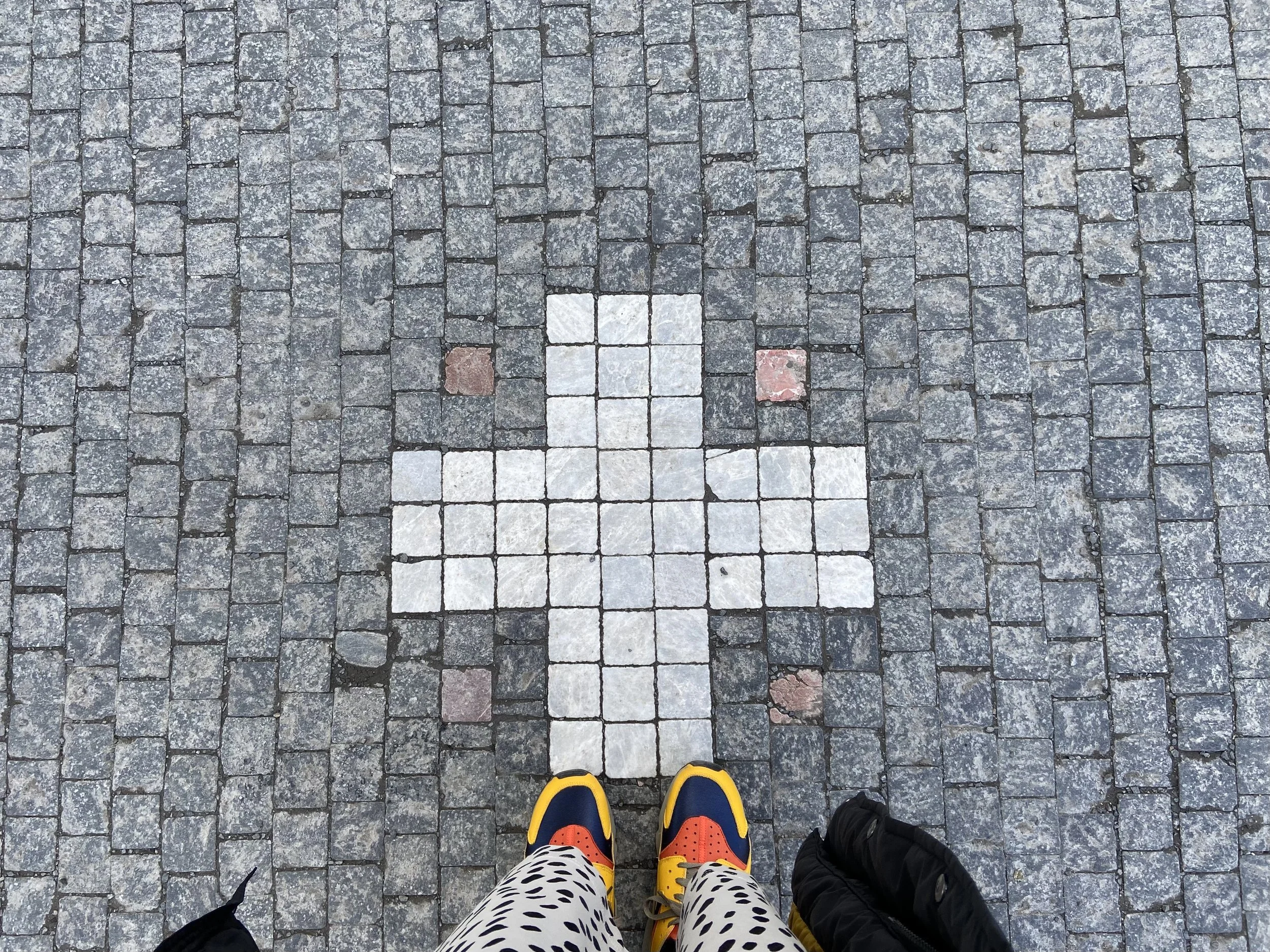
Prague. New streets, new thinking.
A small, practical idea for founders who are functioning fine but could use a little spark
Something keeps coming up in my coaching conversations at the moment. Founders who are stuck - not because they lack ideas or capability, but because they’ve been staring at the same four walls for too long. They need fresh perspective, and they need it without necessarily booking a flight.
Here’s the thing: where you think matters as much as what you think about.
The ways to change your space
It doesn’t have to be dramatic. Changing your space can mean physically moving from your usual working spot to a different one. It might mean changing the internal space of your body - dancing, stretching, breathing a bit deeper. Walking a familiar route in reverse (not literally backwards, that’s a different kind of adventure - going the other way around a loop). It can be a mini trip somewhere new, a walk up a street you’ve never walked up, or a weekend away. It can even be making changes to your existing physical space: a clear-out, a rearranging, a new object, a new lick of paint.
Right now in the north-east of Scotland, nature is providing that change of space for me in the form of spring. The light is shifting each day. Daylight is extending, brightness returning, tiny buds emerging, creatures starting to wake up. I’ve also just returned from a week away - exploring a city and part of the world I’d not visited before. New places, an unfamiliar language, differences in culture, food, architecture, landscape. A lot of freshness in my physical space every day.
But you really don’t need to go exploring another country. Here’s what I mean…
Finding your thinking spot
I’m working with a founder who’s at a pivot point in her business - a lot of significant choices to make, and she’s approaching them with energy and excitement. She’s been doing the right things: figuring things out through small experiments, choosing action over endless cogitation, taking an iterative approach. But she’s reached a stage where she needs fresh perspective, and our conversation turned to where she does her best thinking.
She’s Italian, based in London. She thinks best in sunshine, on the beach, or in beautiful gardens. We’re having this conversation in February, and London in February is not noted for its beaches. She’s not due back in Italy for a while.
So what can we do with that?
She tells me about a window seat in her apartment that gets good sunlight in the morning - she’s made it a lovely thinking spot with cushions and plants nearby. She also mentions an atrium in her building with an undercover garden: quiet, warm, light, green. A place that gives her something of what she longs for from home. So she starts to use both intentionally. A notebook, a drink, a deliberate choice to go there and think. In those spaces, she starts to find clarity on her direction.
Breaking the loop
A client came back to me recently - a returning client who wanted to work on what he called his ‘procrastination’. When we dug into it, the picture was more nuanced. He was working very long hours. Getting locked onto tasks, overdoing the detail, overthinking things that needed to move from his head into iterative action. He wanted a healthier work-life balance - not as a nice-to-have, but because he knew it would make him more effective and help him have greater impact.
He had a long background as a sportsman and really valued looking after himself, but felt he couldn’t while his working days were so long. Time at his desk was also cutting into time with his family - and financial stability for his family was a big part of his ‘why’.
We talked about ‘breaking state’ - simple ways to interrupt the locked-on loop. Sometimes it was just making a cup of tea. Having a quick chat with his wife, who also worked from home. Sometimes it was walking to the end of the garden and back - five minutes outside, but enough to genuinely shift his perspective. Sometimes it was standing and doing five minutes of stretching and breathing to get back into his body and out of his head. Longer walks with the dog gave him thinking time - a chance to check in and ask himself what he really wanted to focus on.
We agreed he’d spend a month experimenting with different approaches. He had physical cues to watch for: tightness, tension, leaning in, a hunch in his back. And mental ones too - patterns of thought that would remind him to pause and change his state for a while.
When he came back after the month, the impact had been significant. He shared he was far more effective with his time. Less tense. Walking more, stretching more. His dog was happier (always a good sign). More connected with his wife during the day. Able to step back from work earlier each evening. He was also noticing things on his walks - nature, small moments, a story about a heron by the river - that were quietly feeding his thinking.
Already solving it
The third example is perhaps the most useful, because this founder had already figured out his own version of this - he just hadn’t named it.
I’m working with him on how he can be more impactful. There are things he’d like to be doing that aren’t possible yet while he waits for a new team member to come into role. So we’re looking at what he can have an impact on right now, and - crucially - how.
He tells me that for admin-type work, he takes himself each morning to his local coffee shop, orders his favourite coffee, opens his laptop, and gets through it. He’s always far more focused there. Something about the combination of caffeine, the ambient activity of people getting on with things, and the fact that he knows he can’t really sit there forever (he’s not buying a second coffee) - there’s a gentle time pressure built in. It works.
For his more strategic thinking, he uses a different space entirely: quieter, at home, different light, his books and sources of ideas around him.
He’s doing this intuitively. What coaching gives him is the space to notice it, name it, and use it deliberately.
What this means for you
Here’s the thing about finding the right space for different kinds of thinking - it’s not a one-time fix. It’s something you experiment with, refine, and keep adjusting as your work and your life change. Think of it as a prototype. What works when you’re in deep planning mode is different from what works when you need to generate ideas, or when you just need to break a stuck loop and come up for air.
The starting questions are simple: where do you do your best thinking? Where do you do your best administrative work? And - crucially - are you actually using those spaces deliberately, or are you defaulting to the same desk, the same chair, the same four walls, wondering why you feel so stuck?
Spring’s doing it for free right now, if you let it. Get outside. Change your route. Notice what shifts.
Where’s your best thinking spot? I’d love to know - drop it in the comments.